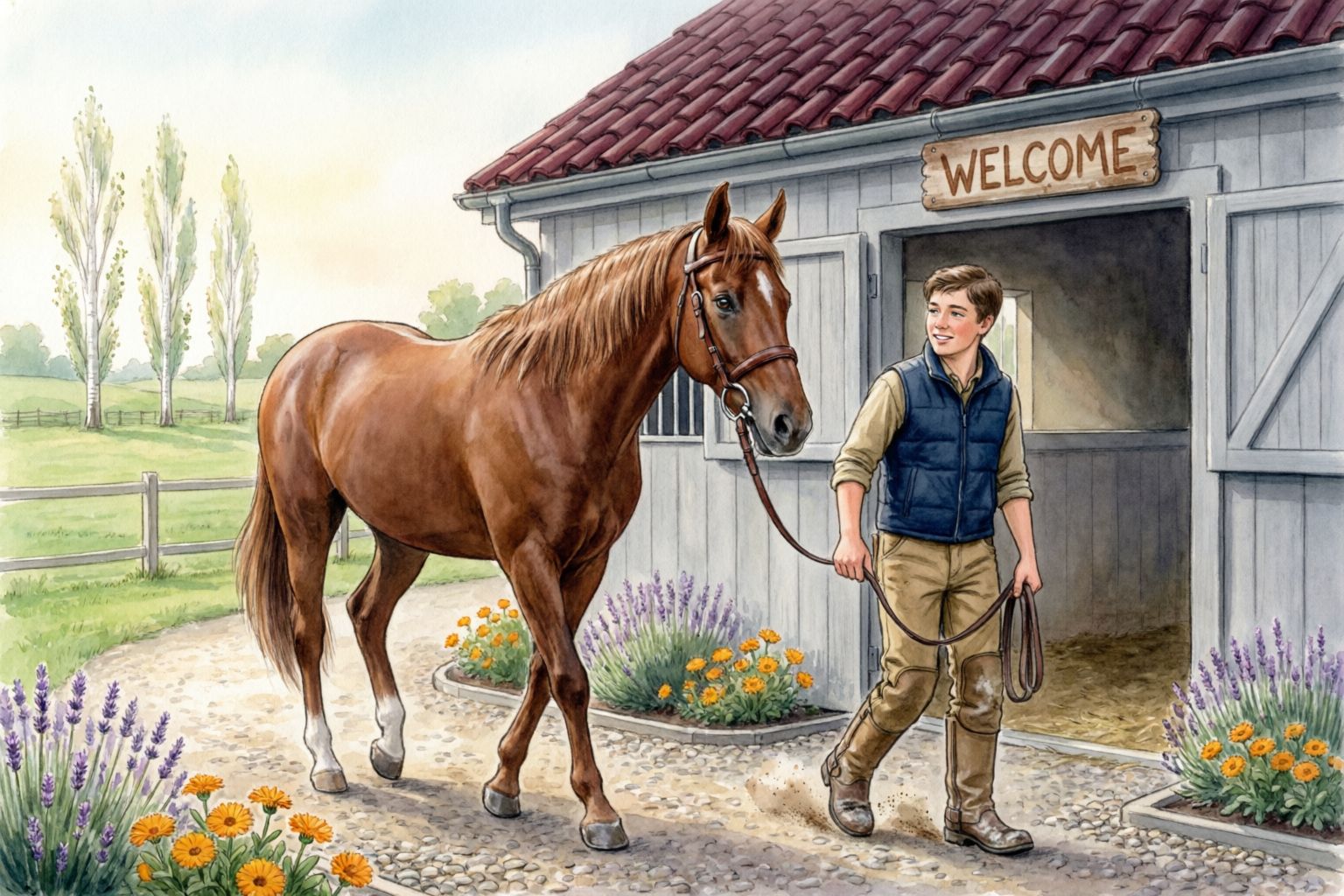
Moving your horse to a new livery yard can be stressful — for both of you. But with good preparation and a gradual approach, the transition can be smooth and positive. Here's how to make it work.
Before the Move
Check vaccination records. Your new yard will almost certainly require up-to-date flu and tetanus vaccinations. Check your horse's passport and make sure everything is current.
Organise worming. Most yards ask for a recent worm count or worming treatment before arrival. A targeted worming approach based on faecal egg counts is increasingly recommended over routine worming.
Sort transport. Whether you have your own horsebox or need to hire transport, book it well in advance. Make sure your horse is comfortable travelling and that the vehicle is roadworthy.
Prepare your equipment. Label your tack and grooming kit with your name. Make a list of everything you need to take so nothing gets forgotten on moving day.
Moving Day
Arrive at the new yard during daylight if possible. Give yourself plenty of time to settle your horse in. Walk them around the yard, show them their new stable, and let them take in the new smells and surroundings at their own pace.
Make up their stable with familiar bedding and put some of their old hay in the rack — familiar scents help them feel secure. If they're going straight out to a field, introduce them to their new field-mates over the fence first if possible.
The First Few Weeks
Expect some behavioural changes in the first week or two. Your horse may be anxious, lose their appetite slightly, or be more alert than usual. This is completely normal and usually settles down as they get used to their new routine.
Try to keep your visiting routine as consistent as possible, especially at first. Horses are creatures of habit, and a predictable routine helps them feel secure.
Building Relationships
Take time to get to know the other liveries and the yard manager. A friendly, supportive yard community makes a huge difference to your livery experience. At Greenbank, we pride ourselves on our welcoming atmosphere — new liveries are always made to feel part of the family.
When to Call the Vet
If your horse is showing signs of significant stress — refusing to eat, excessive pacing, or appearing colicky — contact your vet. While mild stress is normal, extreme reactions need professional attention.
If you're considering a move to Greenbank, we'd love to hear from you. Contact us to arrange a visit and see if we're the right fit for you and your horse.