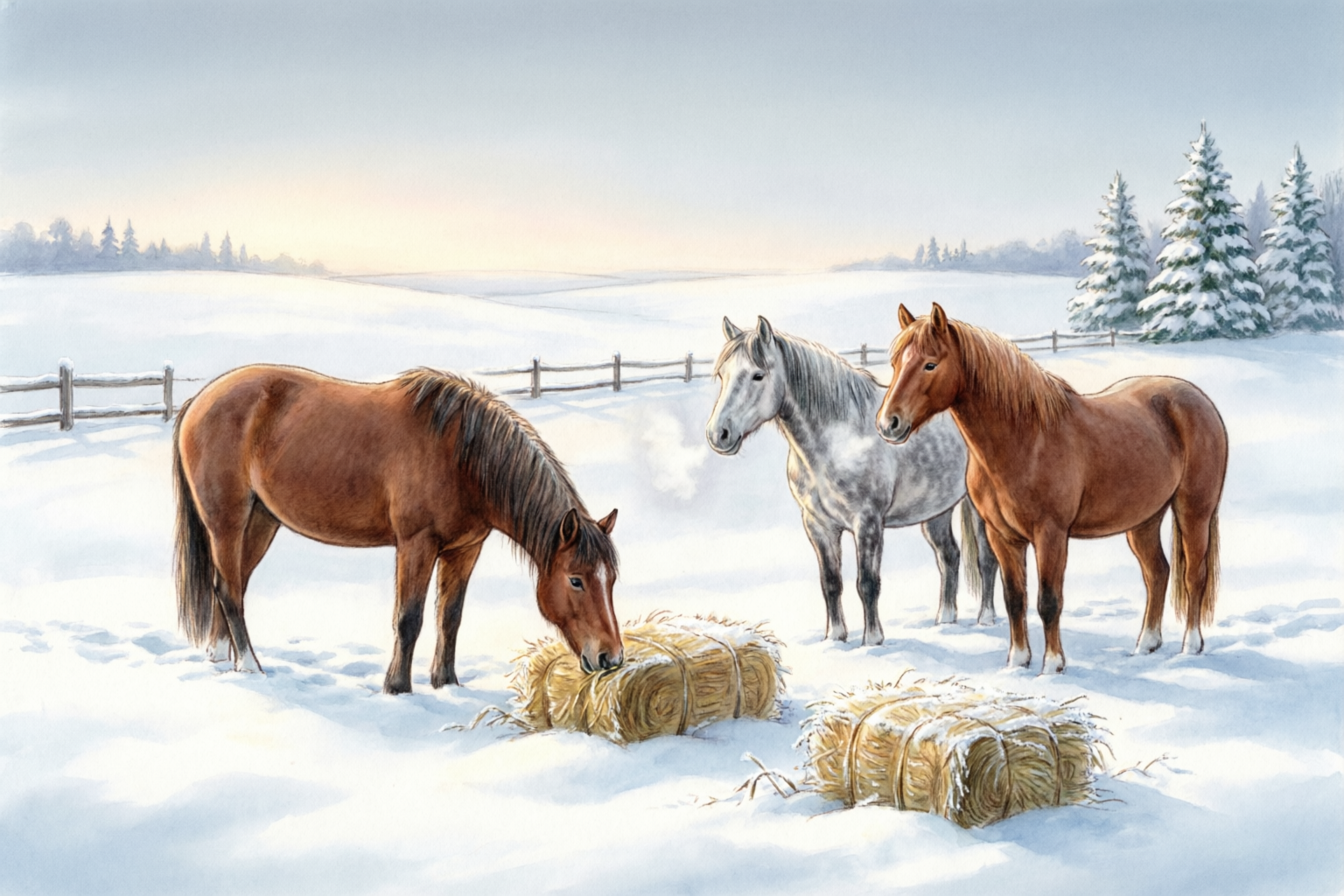
If you keep horses in Lancashire, you know that winter isn't just a season — it's an endurance test. The relentless rain, freezing winds, and dark evenings can stretch from October right through to April. Good winter horse care isn't about surviving those months; it's about keeping your horse healthy, comfortable, and happy when the weather is doing its worst.
In this guide, we'll cover everything you need to know about winter horse care: from feeding adjustments and rugging strategy to turnout routines and keeping yourself sane. Whether this is your first winter with a horse or your twentieth, there's always something useful to pick up.
Feeding: More Energy, More Forage
Your horse's feed requirements increase significantly in cold weather. When the temperature drops below 5°C, horses burn extra energy just to maintain their body temperature. If your horse is clipped, this need increases even more — a full clip removes their natural winter coat and exposes them fully to the elements.
Good quality haylage should be available ad-lib throughout winter. The fermentation process in haylage generates heat from within, which helps maintain body temperature. Think of it as internal central heating for your horse.
Practical feeding tips for winter:
- Increase hard feed gradually — sudden changes can upset the gut
- Add a high-fat supplement like linseed or oil for extra calories without fizz
- Consider a soaked beet pulp mash — it provides fibre and warmth
- Ensure constant access to fresh water — horses drink less when it's cold, which increases colic risk
- Check water troughs twice daily for ice; consider insulated or heated buckets in the stable
If your horse drops weight in winter despite feeding more, speak to your vet. It may be worth having their teeth checked or discussing a targeted feeding plan.
Rugging: The Art of Getting It Right
Over-rugging is now recognised as one of the most common winter horse care mistakes. Many owners rug their horses out of habit or because "they look cold" — but a horse with a natural winter coat is remarkably well insulated.
As a general guide:
- Above 10°C: Most unclipped horses need no rug at all
- 5–10°C: A lightweight turnout rug for unclipped horses; medium for clipped
- 0–5°C: Medium weight for unclipped; heavy for clipped
- Below 0°C: Heavyweight for most horses; extra layers for clipped or thin-skinned breeds
The best way to check is simple: slide your hand under the rug at the base of the chest. Your horse should feel warm — not hot, not cold, and definitely not sweating. If you're unsure, err on the side of slightly under-rugging. A cold horse will tell you by shivering. An over-rugged horse suffers in silence, developing skin conditions and feeling miserable.
Turnout: Why It Still Matters
Turnout isn't optional in winter — it's essential for your horse's physical and mental health. Horses kept stabled for long periods are more prone to stiffness, respiratory problems, and behavioural issues like box-walking and weaving.
That said, turnout needs to be managed sensibly. Standing in deep mud can cause mud fever and strain joints. Here's how to handle it:
- Use a dedicated winter turnout paddock if your yard has one — rotating fields prevents them becoming poached
- Apply barrier cream to legs before turnout to protect against mud fever
- Check and clean legs thoroughly after turnout
- On the worst days, even an hour in an all-weather arena is better than nothing
At Greenbank, we maintain a dedicated winter turnout paddock and an all-weather sand paddock for when the fields are too wet. It means our liveries' horses can still stretch their legs even in the wettest Lancashire weather. You can read more about our winter setup on our livery services page.
Stable Management: Ventilation is Non-Negotiable
It's tempting to batten down the hatches in winter — close windows, block draughts, keep everything sealed tight. But poorly ventilated stables are one of the leading causes of respiratory problems in horses. Ammonia from urine builds up quickly, and dust from bedding and haylage irritates airways.
The goal is ventilation at the top of the stable (where warm, stale air escapes) but no draughts at horse level. If your stable has a window above the door, leave it open — even a small gap makes a big difference.
Deep litter bedding can help in winter — it generates warmth as it breaks down and reduces the frequency of full muck-outs. But it needs careful management. Remove wet patches daily and add fresh bedding on top. If it starts to smell or feel damp, it's time for a full clean-out.
Hoof Care: Don't Let Mud Take Its Toll
Wet, muddy conditions are brutal on hooves. Thrush, abscesses, and softened sole are all more common in winter. The good news is that daily attention prevents most problems.
Pick out feet at least once a day — ideally twice. Look for black, smelly discharge (a sign of thrush) and sensitivity to pressure around the frog (which can indicate an abscess). Apply a hoof dressing or barrier product if your farrier recommends one, and keep up with regular shoeing or trimming appointments.
If your horse is prone to losing shoes in mud, talk to your farrier about options like snow pads or studs.
Looking After Yourself
Winter yard work is physically demanding. Mucking out in the dark, carrying haylage through the mud, and doing everything in freezing rain takes a real toll. Don't ignore your own wellbeing — burnout is real, and it affects the care your horse receives.
- Invest in genuinely waterproof clothing — cheap kit that lets water through after an hour isn't worth it
- Get a good head torch with a red-light mode (less likely to spook horses)
- Keep spare gloves, socks, and a thermos at the yard
- Split jobs with other liveries where possible — team work makes winter bearable
- Give yourself permission to do the bare minimum on the worst days
If you're planning a winter holiday, make sure your horse's care is sorted. See our guide to horse care when going on holiday for practical options and a planning checklist.
Your Winter Horse Care Checklist
Keep this list handy when the cold weather sets in:
- Increase forage and hard feed as temperatures drop
- Check water sources twice daily for ice and cleanliness
- Rug according to temperature and clip status — not habit
- Feel under the rug regularly to check temperature
- Maintain daily turnout, even if reduced
- Apply mud fever protection before and after turnout
- Keep stable ventilation open — no sealed-up stables
- Pick out feet daily and monitor for thrush
- Keep up with farrier and vet appointments
- Look after yourself — good waterproofs, warm layers, rest days
- Arrange holiday cover well in advance if you're going away
Winter doesn't have to be a struggle. With the right routine, the right support, and a yard that's set up for the season, you and your horse can come through it in great shape. If you'd like to see how we manage winter at Greenbank, arrange a visit — we're always happy to show liveries around.